Through our Aditya Nicholas Dias Memorial Fund, we are pleased to sponsor Castle Chess Camp, which is held annually at Emory University in Atlanta. The 2025 camp had 120 campers from 22 states plus Canada, Mexico, and Puerto Rico. Their average US Chess rating was 1750, and 21 students had ratings over 2000.
Aditya, like all former Castle campers, loved chess. He enjoyed making friends at camp whom he would later see at tournaments around the country. He loved learning more about the game from the experienced instructors and then sharing that with his friends and family back home.
Chess was an integral part of his short life, so his family established this memorial fund to honor Aditya’s passion for chess and to help more students benefit from the game. Through this sponsorship, we look forward to enabling more students to enjoy the Castle Camp experience – especially those with limited financial resources.
Thank you for your contributions and for telling schools and community organizations about our Game Changer Program, which provides grants of chess club starter kits and support!
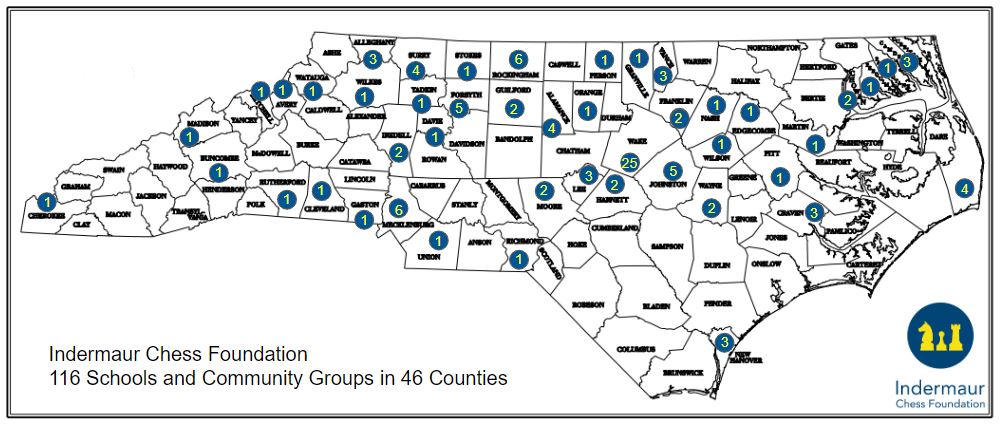
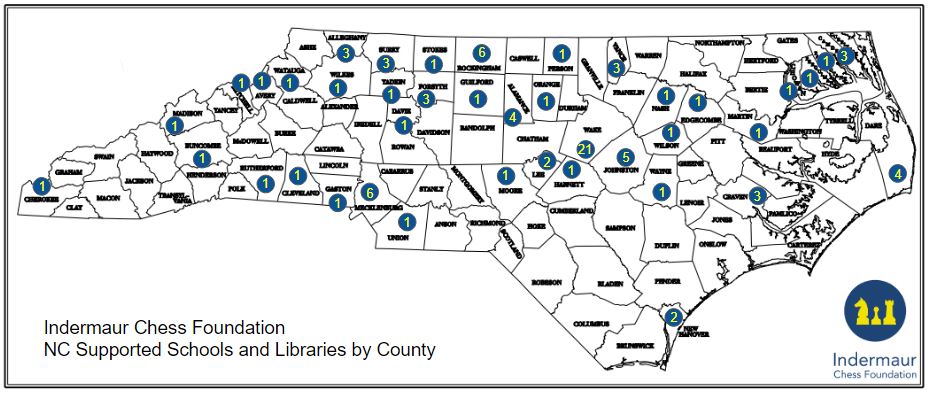
Together, we have helped 116 schools and community organizations in 46 NC counties start chess clubs and experience the benefits of chess! Since we met the original goal we set in 2019 of helping 100 NC schools and community organizations start chess clubs, our new goal is to help these groups start a chess club in each of NC’s 100 counties.
We especially thank the contributors to our Aditya Nicholas Dias Memorial Fund. Aditya loved teaching his family, friends, classmates, and fellow scouts how to play chess. Your donations have enabled us to continue Aditya’s passionate efforts and spread his love for chess to 15 more schools, four senior centers, and two scout camps in the past year.
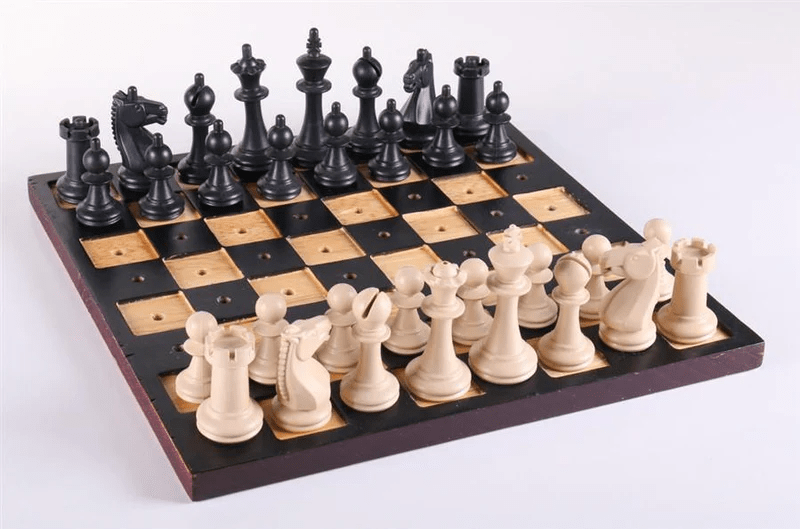
A visually impaired student wanted to join one of the new school clubs, so we provided them a special chess set and additional resources. “It was magical!” described the teacher as she shared the day her visually impaired student first played with her friends.
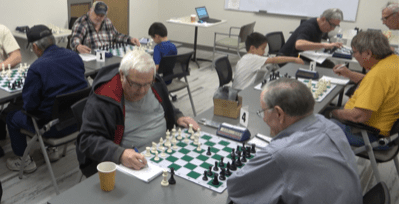
The senior centers are teaching chess classes, and two are holding tournaments. They tell us that the main reason their members want to learn chess is to play with their grandchildren.
The scout camps are teaching the chess merit badge, and one held weekly tournaments.
If you would like to start a chess club at your NC school, library, or community organization, please apply for one of our grants. This year we will continue to provide chess sets, instructor guides and workbooks, and ChessKid accounts to help organizations establish chess clubs, and will organize weekly ChessKid tournaments and other events to enable students from these clubs to play each other.
On June 1, US Chess began requiring tournament directors to complete the core training from the U.S. Center for SafeSport, so one of the topics we discussed was the US Chess Safe Play Policy.
Unfortunately, children and vulnerable adults can be victims of bullying, harassment, and abuse in many different settings – including chess. I commend US Chess for aligning with other fields like sports, scouting, and education to provide positive, welcoming environments where misconduct is less likely to happen.
In 2017, after reports of abuse in gymnastics and other sports, Congress established the U.S. Center for SafeSport to develop and enforce policies, procedures, and training to prevent abuse and misconduct and gave it the authority to resolve abuse and misconduct reports for everyone involved in the U.S. Olympic and Paralympic Movement. More than 5 million people have completed SafeSport training.
Some of the insights that I learned from the training are:
those who try to harm children and vulnerable adults exploit trust and power
they seek organizations that do not have protective policies and training
they groom staff, volunteers, and parents in addition to potential victims
they message and email their victims privately to avoid detection
I am glad that US Chess selected a well-established training program like SafeSport for its Safe Play policy. As a coach for my kids’ soccer teams, I was required to take the SafeSport core course and annual refresher courses, so I already had a SafeSport account. It was easy to link it with US Chess.
what makes for a healthy coach-athlete relationship
what policies and good practices you should look for in your child’s organization
what you should know about sexual abuse and sexual misconduct
what you should know about other forms of misconduct, including bullying, harassment, hazing and emotional and physical misconduct
tips for making sports situations safer for your child
how to talk to your child about misconduct
ways to encourage your child to speak up about misconduct if it occurs
The SafeSport training is very similar to the Youth Protection training which Scouting requires for all registered volunteers as part of its Safe Scouting program. The Parent and Guardian’s Handbook for Safer Sport is also similar to Scouting’s How to Protect Your Children from Child Abuse: A Parent’s Guide. One difference is that Scouting requires mandatory reporting of witnessed or suspected child abuse and of violations of its Youth Protection policies while US Chess requests reporting of alleged misconduct, mistreatment, or behavior that conflicts with the Safe Play policy. When some of my students asked for help earning the chess merit badge, I registered as a chess merit badge counselor and had to complete the required training. Registering as an adult volunteer with my local Scouting council currently costs $77 a year while the US Chess Safe Play training cost is only $19 for the first year and $9 in subsequent years.
The Safe Play policy is also consistent with policies in schools. For example, our local school system requires all volunteers to register and pass criminal history and sexual offender registry checks every year and to comply with specified school board policies. The Safe Play training is also consistent with the annual training we have for all employees and managers where I work.
Chess tournament directors and coaches are the “front line” for US Chess. With the SafeSport training, we are now better equipped to provide our players and their families with positive, welcoming environments where misconduct is less likely to happen.
That’s how the teacher described the day her visually impaired student first played with the special chess set we provided. “She was so excited to play, and the kids loved playing with her.”
We purchased a special wooden chess set from Chess House which has several features for blind or visually impaired players. The different color squares are raised or recessed so they can be identified by touch. All the pieces have pegs on the bottom to fit in the holes in each square; this keeps pieces steady and in the center of their square. The black pieces have pegs on the top to differentiate them from the white pieces.
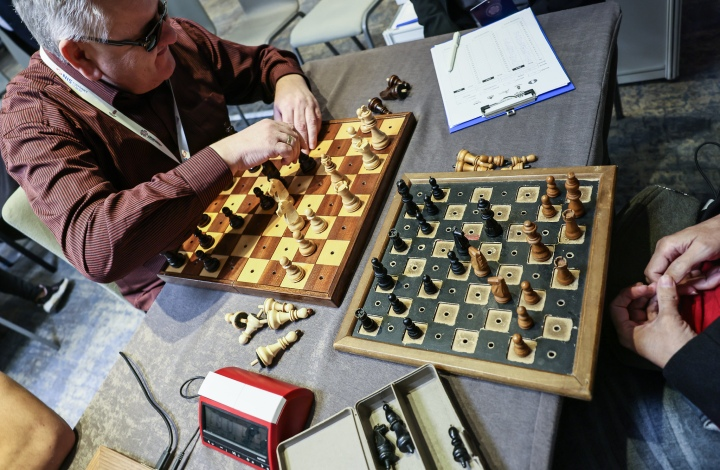
Specialized sets like this enable visually impaired players to play with each other and with sighted players. Several rules have accommodations for visually impaired players. For example, each player must announce their move and have it repeated back to them by their opponent. The touch move rule is adjusted to allow visually impaired players to touch any of the pieces or squares to understand the current position. Once they lift a piece out of its hole, the piece is considered “touched,” and they must move it (if they legally can).
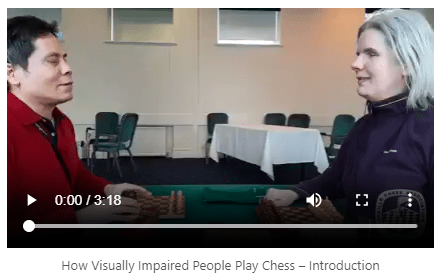
The Braille Chess Association of the UK has a wonderful “how we play” explanation and accompanying video showing how visually impaired people play chess.
Playing chess has additional benefits for those with disabilities. “When I play chess, it’s as close as I’ve ever come to a sense of equality,” Jessica Lauser told CNN in “This woman is a chess champion. And she’s blind.” “When you start the game, no matter who you are, no matter what your physical condition is or where you come from or whether you have money, both sides start with the same thing.”
If your visually impaired children would also like to play chess online, you can use these instructions from the US Blind Chess Association to play on lichess.org with a screen reader. The International Braille Chess Association organizes regular online tournaments on lichess.org for visually impaired players. Both of these organizations provide lists of resources, and the USBCA also offers more than twenty braille chess books.
During the pandemic, many adults learned chess and started playing online, and then “The Queen’s Gambit” inspired even more. Naturally, these new players also wanted to play in person to experience the social, as well as the intellectual, stimulation of the game.
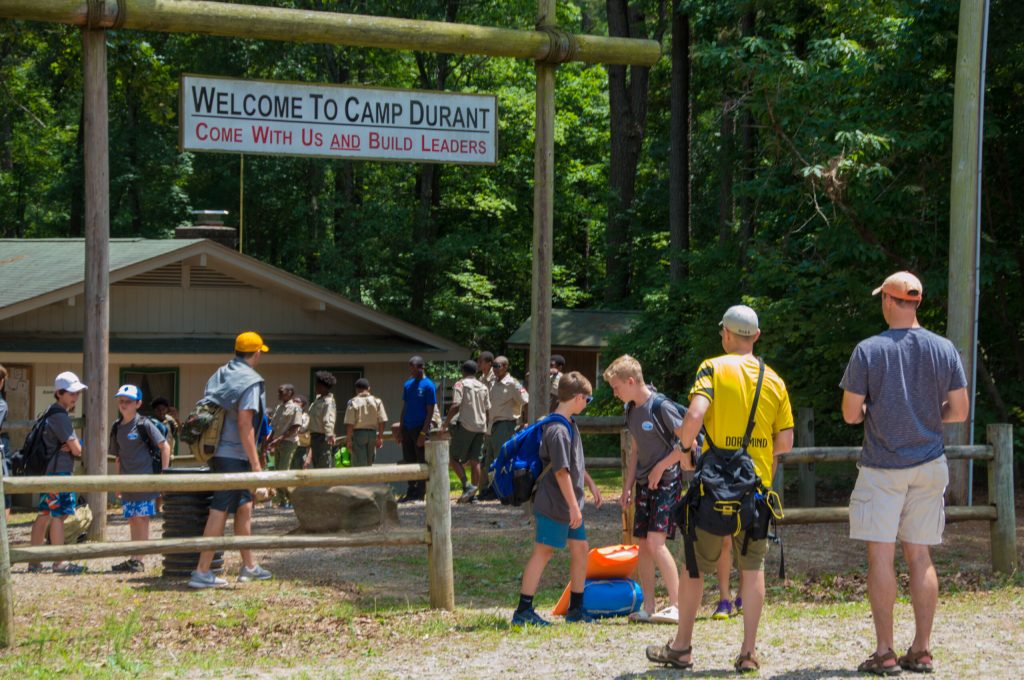
We are excited to support our first Scouting organization, the Occoneechee Council, which serves scouts and their families in twelve counties in central North Carolina. We provided chess sets and instructional materials to the Council, so they can offer chess merit badge courses in their summer programs at Camp Durant in Carthage and during merit badge universities throughout the year.
Since 2019, we have helped schools, libraries, and community organizations across North Carolina start chess clubs through our Game Changer Program.
If you would like to start a chess program in your NC Scout Council or community organization, please apply for one of our grants. If you would like to support our efforts, please consider making a donation. You could designate it for our Aditya Nicholas Dias Memorial Fund, as Aditya loved chess and scouting.
Thank you for your contributions and for telling schools and libraries about our Game Changer Program which provides grants of chess club starter kits and support!
Together, we have helped 95 NC schools and community organizations in 41 NC counties start chess clubs and experience the benefits of chess! We have also helped one school in Virginia and another in Louisiana start chess clubs when leaders of our clubs moved there.
We are very close to reaching the original goal we set in 2019 of helping NC schools and community organizations start 100 chess clubs.
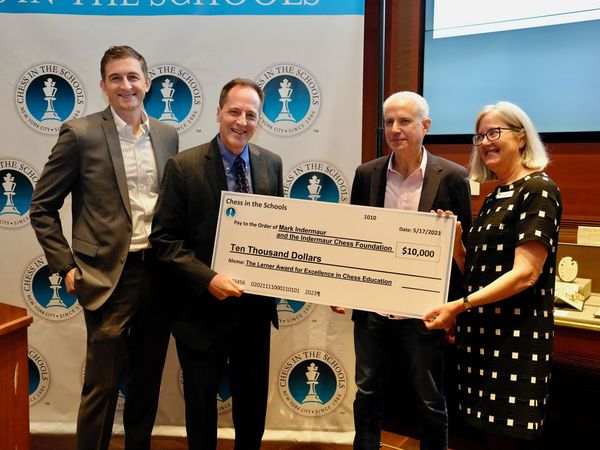
Thank you also to Chess in the Schools for recognizing us with the inaugural Andy Lerner Award for Excellence in Chess Education. This award enables us to support more chess programs, and the publicity around the award is helping us reach more schools and libraries!
During the past year, we supported new school clubs on Cape Hatteras, new library clubs in several mountain counties, our first senior center chess program, and a chess club at a Boys & Girls Club. One of our school clubs made the local news. Through our Aditya Dias Memorial Fund we also supported the NC and SC K-12 Championships.
If you would like to start a chess club at your NC school, library, or community organization, please apply for one of our grants. This year we will continue to provide chess sets, instructor guides and workbooks, and ChessKid accounts to help organizations establish chess clubs. We will also organize weekly ChessKid tournaments and other events to enable students from these clubs to play each other.
Once you have a chess club at your school or library and your students are having fun and improving academic and life skills by playing chess, you can use chess to help teach academic subjects like literacy.
While playing chess, children learn to analyze game situations and consider the potential consequences of different moves. This is analogous to analyzing a story where one would consider the potential actions of characters and anticipate various conclusions.
Several educators have successfully leveraged chess in teaching literacy and shared their results and the resources they developed.
Dr. Alexey W. Root is a senior lecturer at the University of Texas at Dallas where she teaches education classes and prepares students to become teachers. She received her doctorate in education from UCLA and taught high school social studies and English. She is also the Chief Science Officer of Chessable, a Woman International Master, and the 1989 U.S. Women’s Chess Champion. She currently teaches courses that explore the uses of chess in classrooms.
Victoria Winifred is a retired school teacher from New York and Tennessee. She received her MS in Education from Hofstra University and recently published The Princess, the Knight, and the Lost God: a Chess Story. In the 10-minute video Using Chess to Promote Literacy in Preschoolers, which she presented in the 2023 London Chess Conference, she explains how to use chess to teach vocabulary, to prepare students for school expectations, and to plant seeds to grow a love of reading and writing. She shows this example of a child beginning to use words while retelling a chess experience in the correct order:
In Chess and Literacy, Neil Dietsch and Jerry Nash explain how to use chess to teach key literacy proficiencies: visual orientation, symbolic language, translation from two-dimensional to three-dimensional, and pattern recognition.
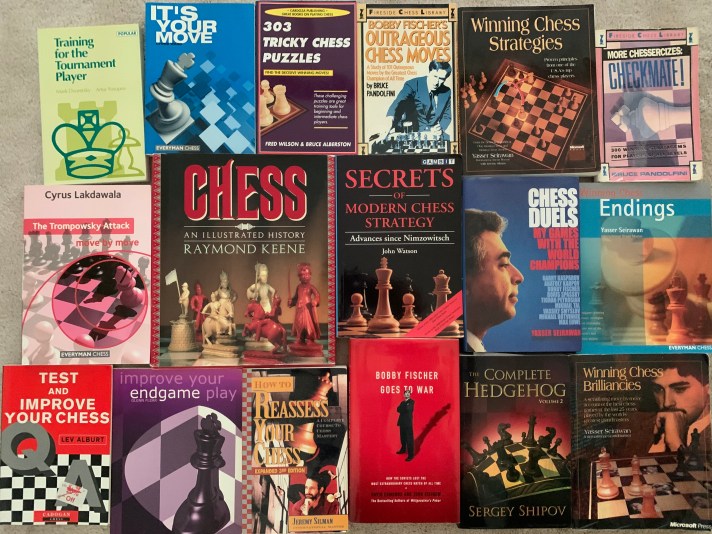
You can also use chess-related story books like these to teach literacy to young chess fans:
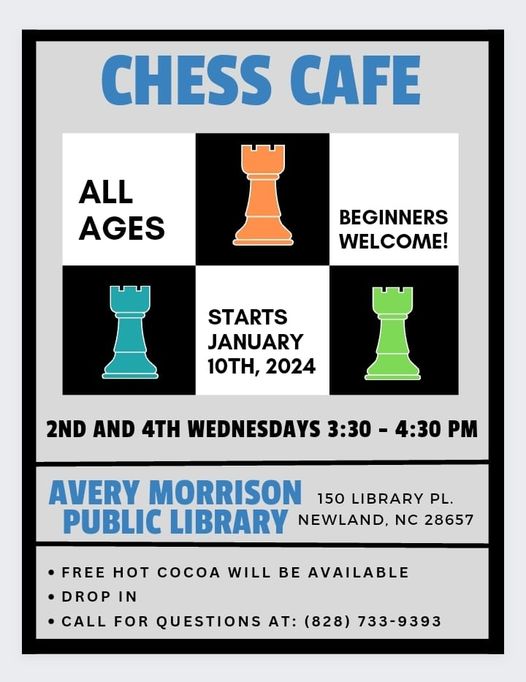
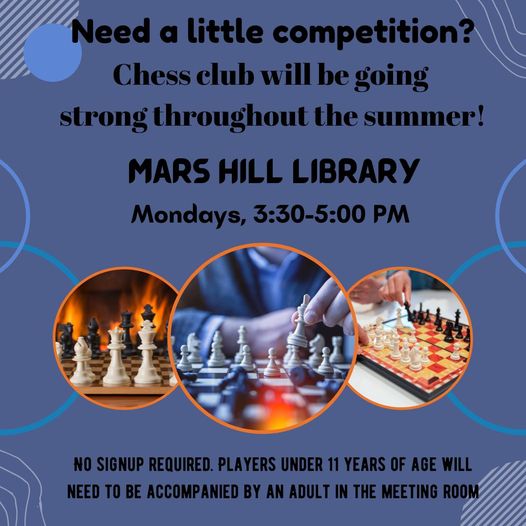
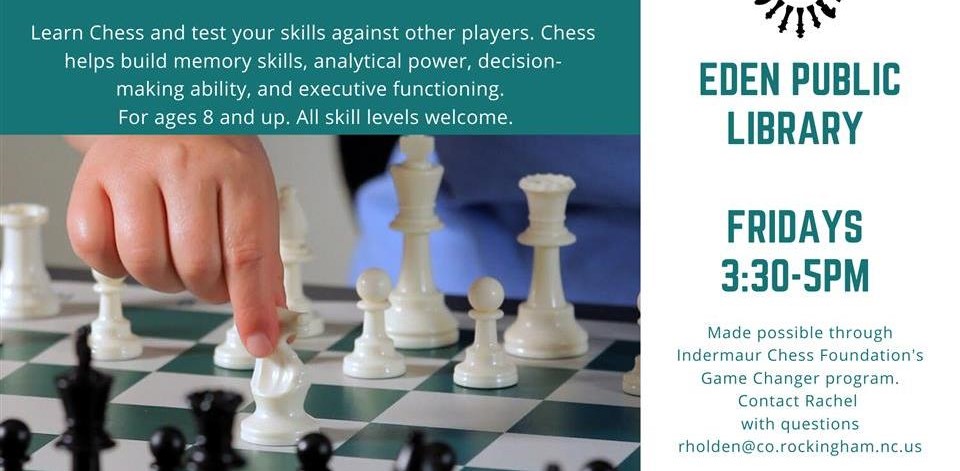
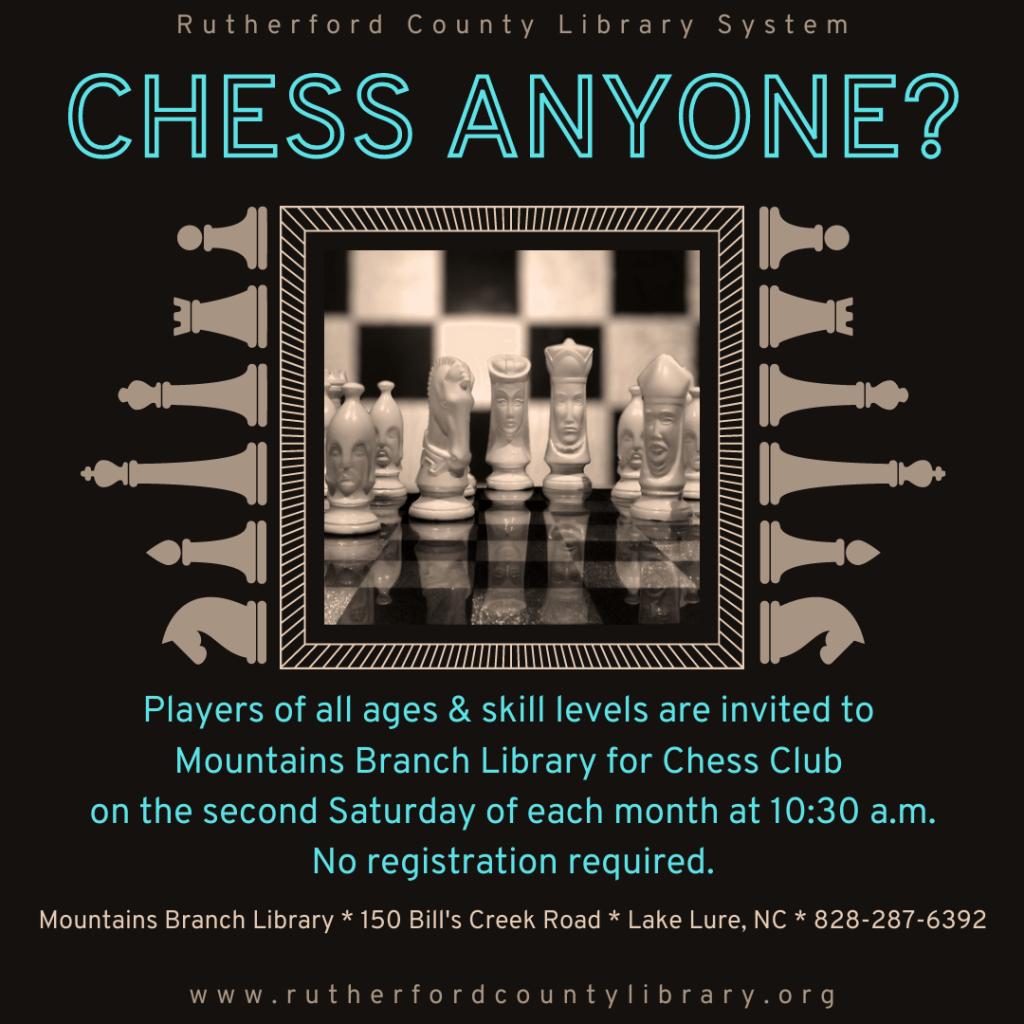
We have provided chess sets, instructional materials, and/or ChessKid accounts to the following libraries and community organizations in NC so they could start chess clubs. In this list, we have included the most recent information we have about organization web sites, club meeting times, and locations.
Would you like to start a chess club at your child’s elementary or middle school?
Many NC elementary and middle schools have started chess clubs with the help of our Game Changer program. Here are are some ideas from these clubs to help you start your own school chess club:
Have simple, fun goals: One club’s goals are to have fun, learn, and play lots of chess! Winning is intentionally not one of their goals, but as they pursue these three goals their children do win plenty of games and trophies.
Meet regularly: Most clubs meet weekly or every other week after school. Some meet before school, during lunch, or during a special “club period” (when all clubs meet).
Be inclusive: Most clubs are open to all ages and all ability levels. They invite beginners to join at the start of the year, so a parent or teacher and a few older students can teach them the basics. Students who already know how to play can join at any time during the year.
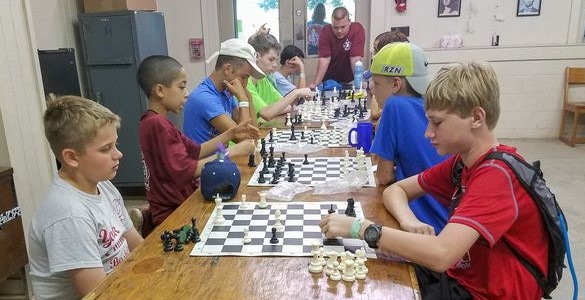
Play lots of chess! Every meeting children spend most of the time playing chess. Even children learning how to play can play mini-games with only a few pieces. Group the children by ability rather than age/grade so that their games are more fun and challenging and so that they learn more from them. Some clubs record the results of their games, so they can see if anyone is winning most of their games and needs to move up to a more challenging group. Try to avoid moving students down. Have a parent supervise each group of about 16 children. These parents do not need to know how to play chess.
Keep lessons brief and fun: Most clubs teach 10-15 minute lessons to their experienced players, so their students still have plenty of time to practice what they learn by playing chess. Many clubs have high school students teach; some use teachers, parents, or grandparents. Some clubs have middle school students teach with an adult helping to supervise the children. Most clubs use lessons from ChessKid or from the Chess Steps guide and workbook we provide.
Get PTA support: If your club is sponsored by the PTA, you can get some funding but more importantly a lot of support with volunteers, meeting space, publicity, etc.
Keep expenses low: Many clubs collect a small activity fee or ask for donations to buy more chess sets and eventually a few chess clocks. Most make their activity fee optional, for example collecting a $30 activity fee from those who are able to pay. While some families are not able to pay others contribute more. Most clubs deposit their funds with their PTA.
Use ChessKid: Most clubs use the Basic ChessKid accounts that we provide with our Game Changer program. Some clubs buy discounted ChessKid Gold subscriptions through our program for all of their students, and some make them available to families who would like to buy them. Kids really enjoy ChessKid, and the ones who use it improve a lot.
Wear school or chess club t-shirts to tournaments: Most clubs wear school t-shirts or chess club t-shirts when they go to a tournament especially team tournaments. It is really helpful to have kids (and some parents) wearing the same shirt at large tournaments. Consider using the same t-shirt design for several years so families don’t have to buy new ones each year.
Share photos and congratulations: Some clubs share photos and congratulations using Twitter or Instagram. Others use a private Facebook group.
Use keychain chess pieces as prizes: A few clubs use colorful keychain chess pieces to reward effort, courage, and teamwork. For example, students can earn keychain pieces by teaching someone else how to play, playing in their first tournament, or doing 250 puzzles on ChessKid. Kids get really excited about these!
Give every child a chance to play in tournaments: Most clubs hold their own tournaments. Some use their club budget to pay the tournament fee at a local event for students whose families can’t afford it.
Publicize your success! All clubs share their tournament awards in school announcements and PTA emails and display their team trophies in the school trophy case. One club has a local trophy shop engrave every team member’s name on their team trophies.
Share your success with the local news: Cape Hatteras and Watauga school clubs had stories in their local newspapers. Wiley Elementary was on TV.
Consider using name tags for students to help parent volunteers learn their names. This is especially helpful for large chess clubs.
Watch an inspiring chess movie together: One club went as a group to see Queen of Katwe in a theater.
Invite a strong player for a simultaneous exhibition with some of your students. You could invite a strong player from the middle or high school where your students will go.
Organize a tournament at the end of the year: You could run a club tournament with all of your students in one section. If your club is larger, you could have separate sections for each grade.
Celebrate your success with an end of year party! Hand out trophies or certificates to the winners of your club tournament, recognize your graduating students, and enjoy some snacks. Hunter Elementary made a fun chess cake.











 Indermaur Chess Foundation