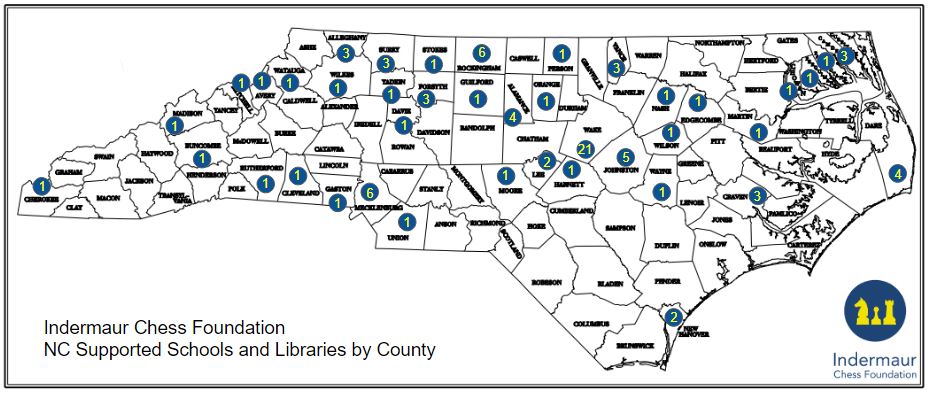
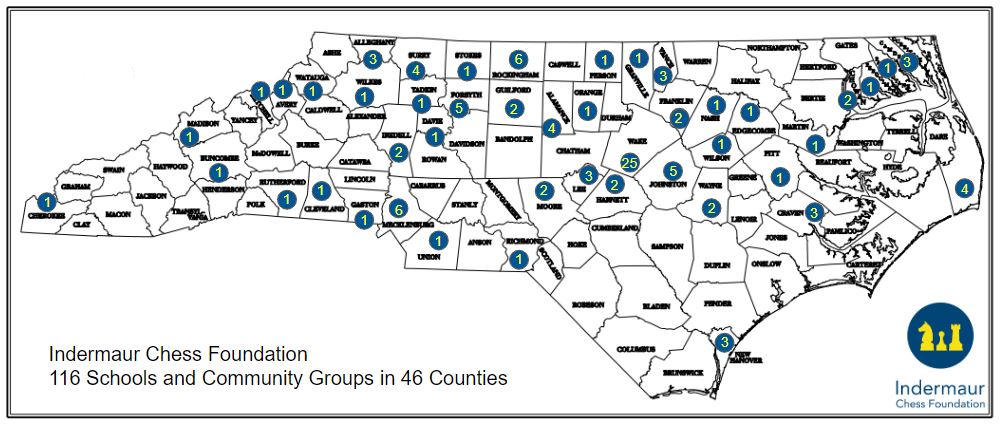
116 Chess Clubs across 46 NC Counties!

Thank you for your contributions and for telling schools and community organizations about our Game Changer Program, which provides grants of chess club starter kits and support!

Together, we have helped 116 schools and community organizations in 46 NC counties start chess clubs and experience the benefits of chess! Since we met the original goal we set in 2019 of helping 100 NC schools and community organizations start chess clubs, our new goal is to help these groups start a chess club in each of NC’s 100 counties.
We especially thank the contributors to our Aditya Nicholas Dias Memorial Fund. Aditya loved teaching his family, friends, classmates, and fellow scouts how to play chess. Your donations have enabled us to continue Aditya’s passionate efforts and spread his love for chess to 15 more schools, four senior centers, and two scout camps in the past year.

A visually impaired student wanted to join one of the new school clubs, so we provided them a special chess set and additional resources. It was magical! described the teacher as she shared the day her visually impaired student first played with her friends.

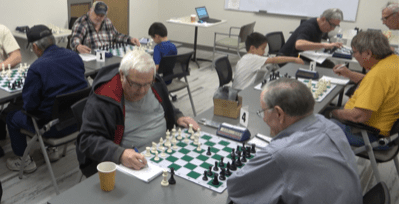
The senior centers are teaching chess classes, and two are holding tournaments. They tell us that the main reason their members want to learn chess is to play with their grandchildren.
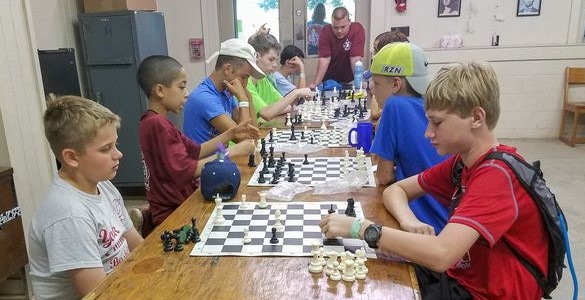
The scout camps are teaching the chess merit badge, and one held weekly tournaments.
If you would like to start a chess club at your NC school, library, or community organization, please apply for one of our grants. This year we will continue to provide chess sets, instructor guides and workbooks, and ChessKid accounts to help organizations establish chess clubs, and will organize weekly ChessKid tournaments and other events to enable students from these clubs to play each other.

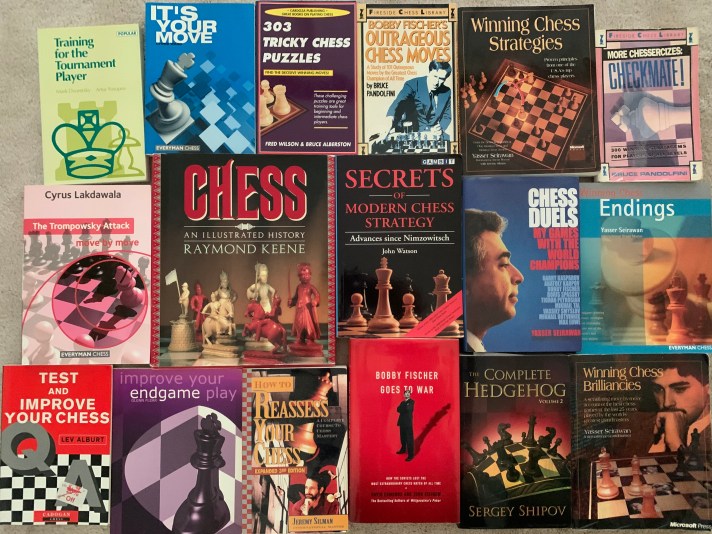
We have also received more donations of gently used chess books which we continue to provide to NC libraries with chess clubs.
Thank you, again, for your support!
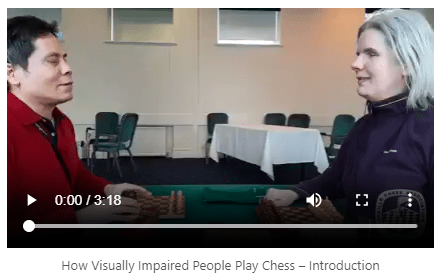
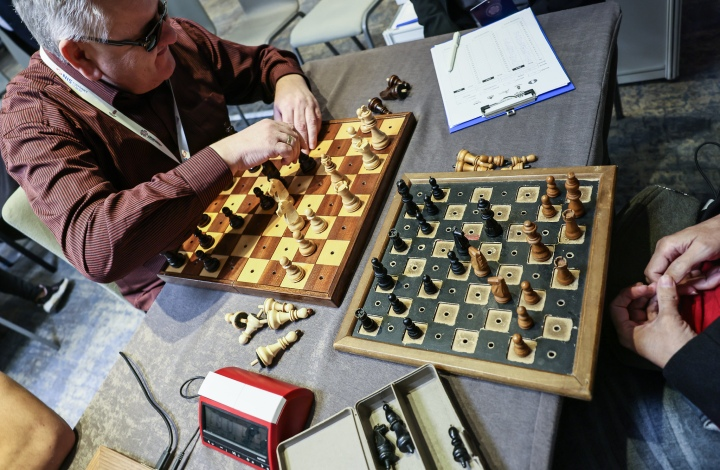
Empowering Visually Impaired Players Through Chess: Discover Specialized Chess Sets and Resources

“It was magical!”

That’s how the teacher described the day her visually impaired student first played with the special chess set we provided. “She was so excited to play, and the kids loved playing with her.”

This teacher had started a chess club at Oberlin Magnet Middle School using one of our grants. Since her school is one of five in the Wake County Public School System which provides specialized programs and services for visually impaired students, she asked how she could help these students join her club.

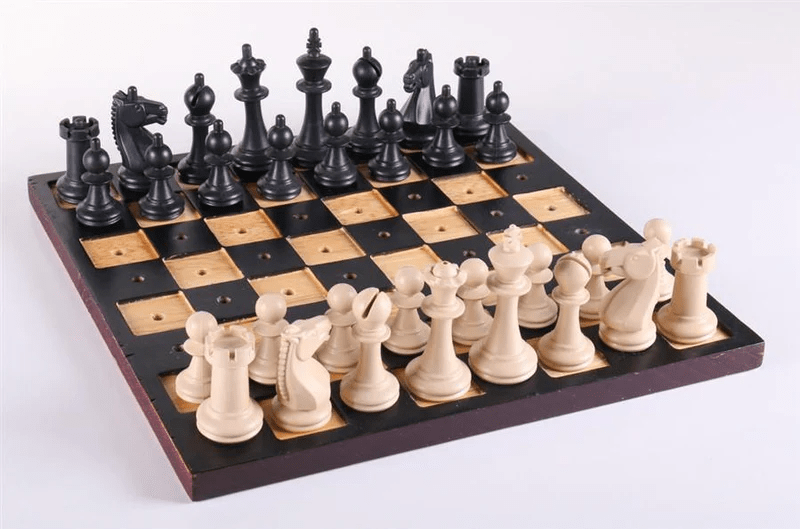
We purchased a special wooden chess set from Chess House which has several features for blind or visually impaired players. The different color squares are raised or recessed so they can be identified by touch. All the pieces have pegs on the bottom to fit in the holes in each square; this keeps pieces steady and in the center of their square. The black pieces have pegs on the top to differentiate them from the white pieces.

Specialized sets like this enable visually impaired players to play with each other and with sighted players. Several rules have accommodations for visually impaired players. For example, each player must announce their move and have it repeated back to them by their opponent. The touch move rule is adjusted to allow visually impaired players to touch any of the pieces or squares to understand the current position. Once they lift a piece out of its hole, the piece is considered “touched,” and they must move it (if they legally can).

The Braille Chess Association of the UK has a wonderful “how we play” explanation and accompanying video showing how visually impaired people play chess.

Playing chess has additional benefits for those with disabilities. “When I play chess, it’s as close as I’ve ever come to a sense of equality,” Jessica Lauser told CNN in “This woman is a chess champion. And she’s blind.” “When you start the game, no matter who you are, no matter what your physical condition is or where you come from or whether you have money, both sides start with the same thing.”

If your visually impaired children would also like to play chess online, you can use these instructions from the US Blind Chess Association to play on lichess.org with a screen reader. The International Braille Chess Association organizes regular online tournaments on lichess.org for visually impaired players. Both of these organizations provide lists of resources, and the USBCA also offers more than twenty braille chess books.

If you would like to organize a tournament which will include visually impaired players, US Chess maintains an excellent set of Guidelines for Accessible Chess Events. Rule 35F in the The US Chess Rule Book: the Official Rules of Chess describes the specific rules for visually impaired players, and “Opponents with disabilities need special care, so there are special rules to make it fair” answers common questions about these rules.

Ascribing to the US Chess core values,
we believe everyone has a seat at the chess table.

95 Chess Clubs across 41 NC Counties!

Thank you for your contributions and for telling schools and libraries about our Game Changer Program which provides grants of chess club starter kits and support!

Together, we have helped 95 NC schools and community organizations in 41 NC counties start chess clubs and experience the benefits of chess! We have also helped one school in Virginia and another in Louisiana start chess clubs when leaders of our clubs moved there.

We are very close to reaching the original goal we set in 2019 of helping NC schools and community organizations start 100 chess clubs.

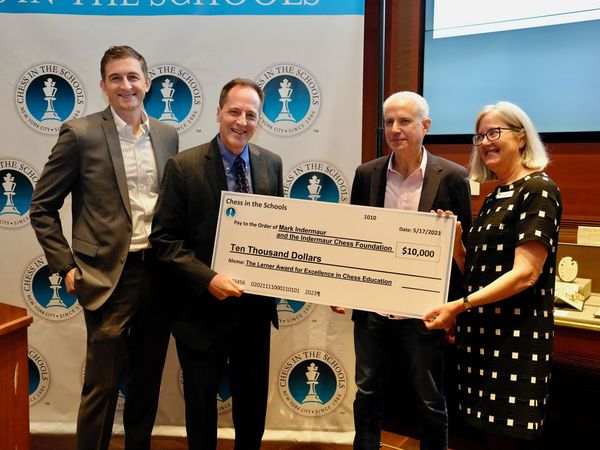
Thank you also to Chess in the Schools for recognizing us with the inaugural Andy Lerner Award for Excellence in Chess Education. This award enables us to support more chess programs, and the publicity around the award is helping us reach more schools and libraries!

During the past year, we supported new school clubs on Cape Hatteras, new library clubs in several mountain counties, our first senior center chess program, and a chess club at a Boys & Girls Club. One of our school clubs made the local news. Through our Aditya Dias Memorial Fund we also supported the NC and SC K-12 Championships.

If you would like to start a chess club at your NC school, library, or community organization, please apply for one of our grants. This year we will continue to provide chess sets, instructor guides and workbooks, and ChessKid accounts to help organizations establish chess clubs. We will also organize weekly ChessKid tournaments and other events to enable students from these clubs to play each other.

We have also received more donations of gently used chess books which we continue to provide to NC libraries with chess clubs.

Thank you, again, for your support!
Using chess to teach literacy

Once you have a chess club at your school or library and your students are having fun and improving academic and life skills by playing chess, you can use chess to help teach academic subjects like literacy.

While playing chess, children learn to analyze game situations and consider the potential consequences of different moves. This is analogous to analyzing a story where one would consider the potential actions of characters and anticipate various conclusions.

Several educators have successfully leveraged chess in teaching literacy and shared their results and the resources they developed.

Dr. Alexey W. Root is a senior lecturer at the University of Texas at Dallas where she teaches education classes and prepares students to become teachers. She received her doctorate in education from UCLA and taught high school social studies and English. She is also the Chief Science Officer of Chessable, a Woman International Master, and the 1989 U.S. Women’s Chess Champion. She currently teaches courses that explore the uses of chess in classrooms.

In Read, Write, Checkmate: Enrich Literacy with Chess Activities, she shows teachers how to use chess to help students in grades three through eight with literacy. She explains how to meet educational objectives while teaching chess to students and how to have kids read and write about chess while learning to play. The final chapter explains how chess can be used in libraries. All activities are linked to NCTE/IRA national standards for language arts. Her other books include: Children and Chess: A Guide for Educators, Thinking with Chess: Teaching Children Ages 5-14, and Science, Math, Checkmate: 32 Chess Activities for Inquiry and Problem Solving.

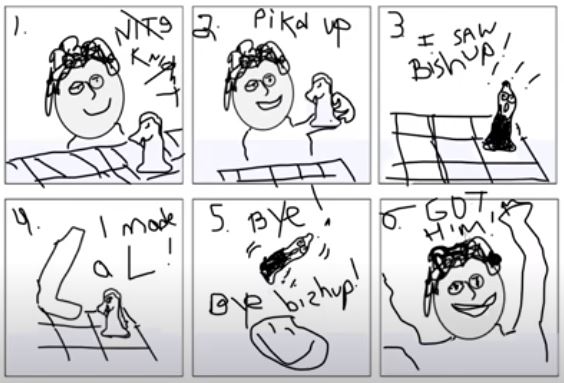
Victoria Winifred is a retired school teacher from New York and Tennessee. She received her MS in Education from Hofstra University and recently published The Princess, the Knight, and the Lost God: a Chess Story. In the 10-minute video Using Chess to Promote Literacy in Preschoolers, which she presented in the 2023 London Chess Conference, she explains how to use chess to teach vocabulary, to prepare students for school expectations, and to plant seeds to grow a love of reading and writing. She shows this example of a child beginning to use words while retelling a chess experience in the correct order:

In See how writing is like a great game of chess, Anupam Chugh explains how, as a writer and a chess player, he sees a game of chess in every story.

In Chess and Literacy, Neil Dietsch and Jerry Nash explain how to use chess to teach key literacy proficiencies: visual orientation, symbolic language, translation from two-dimensional to three-dimensional, and pattern recognition.

You can also use chess-related story books like these to teach literacy to young chess fans:

Now with these resources, you can start leveraging chess in your English and Language Arts classes!

Please share your experiences using chess to teach, and I will update this article with your insights.

NC Community Chess Clubs

We have provided chess sets, instructional materials, and/or ChessKid accounts to the following libraries and community organizations in NC so they could start chess clubs. In this list, we have included the most recent information we have about organization web sites, club meeting times, and locations.

For even more places to play chess in NC, the NC Chess Association maintains this club directory, and you can also “check out” these NC outdoor chess locations.

Alleghany County

Alleghany County Public Library, 2nd and 4th Mondays 4:00 pm, 115 Atwood St., Sparta, NC

AVERY County

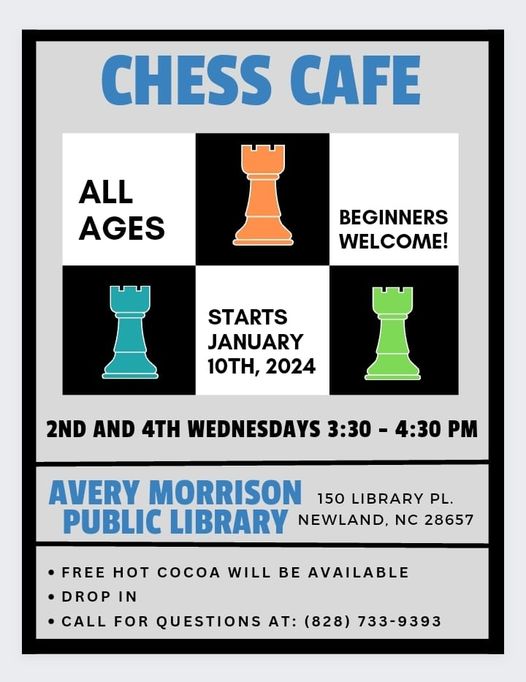
Avery County Morrison Public Library, Table-top Gamers Tuesdays 4-8pm and Chess Cafe 2nd and 4th Wednesdays 3:30-4:30pm,150 Library Place, Newland, NC 28657

Cherokee County

Cherokee County Arts Council, Mondays 3:30-5pm, 33 Valley River Ave., Murphy, NC

Chowan County

Shepard-Pruden Memorial Library, borrow board games with your library card, 106 W. Water St., Edenton, NC

Craven County

New Bern – Craven County Public Library, Game Club for Teens, Fridays 12-3pm, 400 Johnson St., New Bern, NC

Davie County

Davie County Public Library, 371 N. Main St., Mocksville, NC

Edgecombe County

Braswell Memorial Library, 727 N. Grace St., Rocky Mount, NC

Forsyth County

Salvation Army Ken Carlson Boys & Girls Club, 2100 Reynolds Park Rd, Winston-Salem, NC

gaston County

Union Road Public Library, 5800 Union Rd., Gastonia, NC

Harnett County

Dunn Public Library, Chess & Checkers Club, 2nd Thursdays 5-6pm, 110 E. Divine St., Dunn, NC (club may now meet at the Angier branch)

Johnston County

Selma Public Library, 3011 N. Pollock St., Selma, NC
Public Library of Smithfield and Johnston County, 305 E Market St, Smithfield, NC

MAdison County

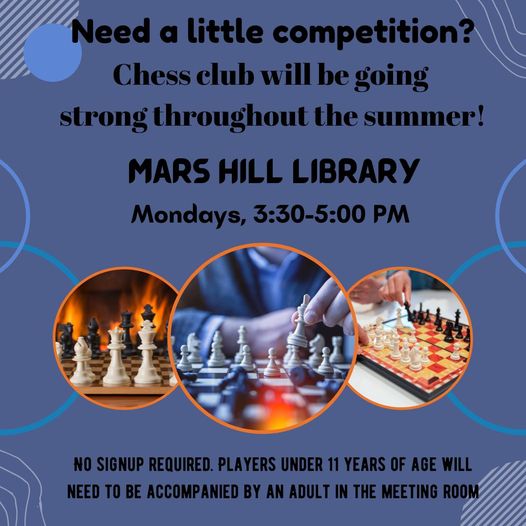
Madison County Public Library, Mondays 3:30-5:30 pm, 25 Library St.
Mars Hill, NC 28754

MArtin County

Martin Memorial Library, 200 N. Smithwick Rd., Williamston, NC (club held with Boys & Girls Club)

Mitchell County

Mitchell County Public Library, 18 N Mitchell Ave., Bakersville, NC (club held at Spruce Pine)
Spruce Pine Public Library, Wednesdays 3:30-4:40 pm, 142 Walnut Ave., Spruce Pine, NC

NASH County

Harold D. Cooley Library, 114 W. Church St., Nashville, NC

PerQuimans County

Perquimans County Library, 514 S. Church St., Hertford, NC

Person County

Person County Public Library, teen games, Thursdays 2pm, 319 S. Main St. Roxboro, NC

Rockingham County

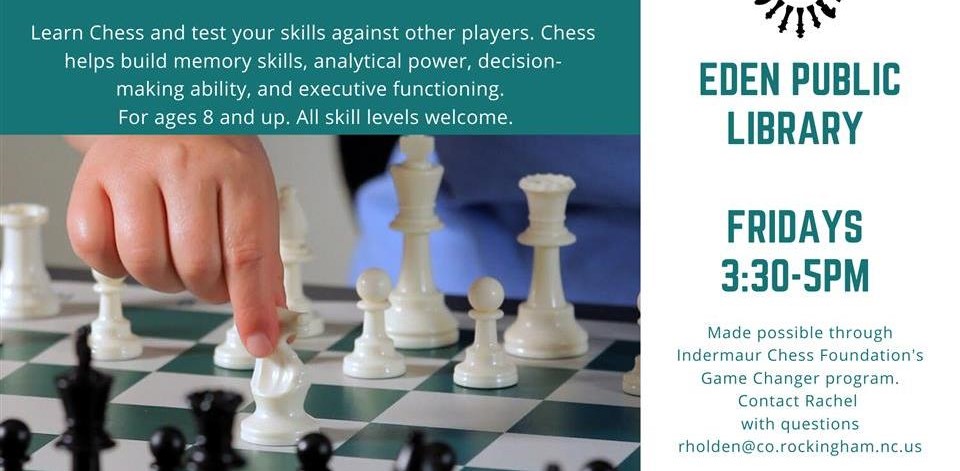
Eden Public Library, Fridays 3:30-5pm, 598 S. Pierce St., Eden, NC

Rutherford County

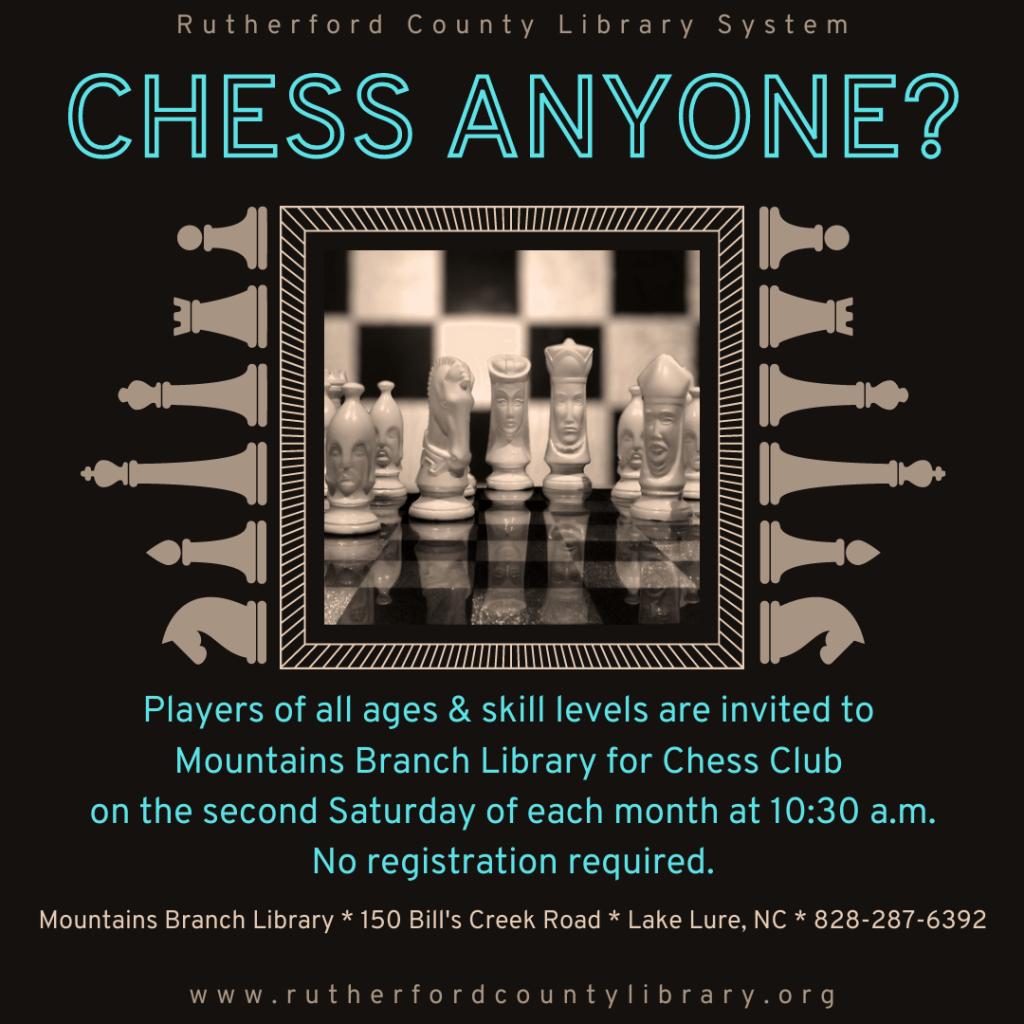
Rutherford County Library, second Saturday of each month at 10:30 a.m., Mountains Branch Library, 150 Bill’s Creek Rd., Lake Lure, NC

Stokes County

Danbury Public Library, 1007 N. Main St., Danbury, NC

Surry County

Dobson Community Library, 113 S. Crutchfield St., Dobson, NC
Mount Airy Public Library, chess club on Wednesdays 4:30 – 7:30 pm, 145 Rockford St., Mt. Airy, NC

Union County

Union West Regional Library, 123 Unionville Indian Trail Rd., Indian Trail, NC (club may now meet at the Marshville Library)

VANCE County

Katarah’s Hope, Henderson, NC

Wake County

Northern Wake Senior Center, Wednesday chess classes: Beginner’s 9-10:15 am, Intermediate 10:30-11:45am, 235 E. Holding Ave., Wake Forest, NC

Wayne County

Wayne County Public Library, teen game night, Tuesdays 5-6pm, 1001 E. Ash St., Goldsboro, NC (club may now meet in Mt. Olive branch.)

Wilkes County

Wilkes County Public Library, 215 Tenth St., North Wilkesboro, NC

Yadkin County

Boonville Community Public Library, 121 W. Main St., Booneville, NC