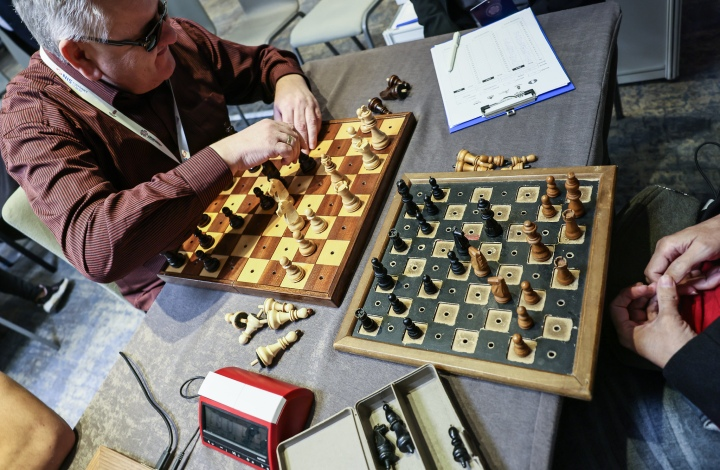
US Chess Safe Play: Creating positive, safe environments for players

Dan Lucas, the Senior Director of Strategic Communication for US Chess, interviewed me for the June 2024 edition of One Move at a Time.
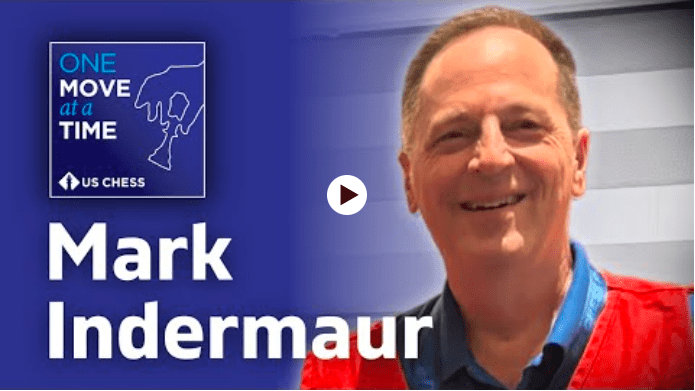
On June 1, US Chess began requiring tournament directors to complete the core training from the U.S. Center for SafeSport, so one of the topics we discussed was the US Chess Safe Play Policy.

Unfortunately, children and vulnerable adults can be victims of bullying, harassment, and abuse in many different settings – including chess. I commend US Chess for aligning with other fields like sports, scouting, and education to provide positive, welcoming environments where misconduct is less likely to happen.

In 2017, after reports of abuse in gymnastics and other sports, Congress established the U.S. Center for SafeSport to develop and enforce policies, procedures, and training to prevent abuse and misconduct and gave it the authority to resolve abuse and misconduct reports for everyone involved in the U.S. Olympic and Paralympic Movement. More than 5 million people have completed SafeSport training.

Some of the insights that I learned from the training are:

  • those who try to harm children and vulnerable adults exploit trust and power
  • they seek organizations that do not have protective policies and training
  • they groom staff, volunteers, and parents in addition to potential victims
  • they message and email their victims privately to avoid detection

I am glad that US Chess selected a well-established training program like SafeSport for its Safe Play policy. As a coach for my kids’ soccer teams, I was required to take the SafeSport core course and annual refresher courses, so I already had a SafeSport account. It was easy to link it with US Chess.

I urge chess parents to read the free Parent and Guardian’s Handbook for Safer Sport and US Chess to make it available via the Safe Play Hub. This important handbook explains:

  • what makes for a healthy coach-athlete relationship
  • what policies and good practices you should look for in your child’s organization
  • what you should know about sexual abuse and sexual misconduct
  • what you should know about other forms of misconduct, including bullying, harassment, hazing and emotional and physical misconduct
  • tips for making sports situations safer for your child
  • how to talk to your child about misconduct
  • ways to encourage your child to speak up about misconduct if it occurs

The SafeSport training is very similar to the Youth Protection training which Scouting requires for all registered volunteers as part of its Safe Scouting program. The Parent and Guardian’s Handbook for Safer Sport is also similar to Scouting’s How to Protect Your Children from Child Abuse: A Parent’s Guide. One difference is that Scouting requires mandatory reporting of witnessed or suspected child abuse and of violations of its Youth Protection policies while US Chess requests reporting of alleged misconduct, mistreatment, or behavior that conflicts with the Safe Play policy. When some of my students asked for help earning the chess merit badge, I registered as a chess merit badge counselor and had to complete the required training. Registering as an adult volunteer with my local Scouting council currently costs $77 a year while the US Chess Safe Play training cost is only $19 for the first year and $9 in subsequent years.

The Safe Play policy is also consistent with policies in schools. For example, our local school system requires all volunteers to register and pass criminal history and sexual offender registry checks every year and to comply with specified school board policies. The Safe Play training is also consistent with the annual training we have for all employees and managers where I work.

Chess tournament directors and coaches are the “front line” for US Chess. With the SafeSport training, we are now better equipped to provide our players and their families with positive, welcoming environments where misconduct is less likely to happen.
Empowering Visually Impaired Players Through Chess: Discover Specialized Chess Sets and Resources

“It was magical!”

That’s how the teacher described the day her visually impaired student first played with the special chess set we provided. “She was so excited to play, and the kids loved playing with her.”

This teacher had started a chess club at Oberlin Magnet Middle School using one of our grants. Since her school is one of five in the Wake County Public School System which provides specialized programs and services for visually impaired students, she asked how she could help these students join her club.

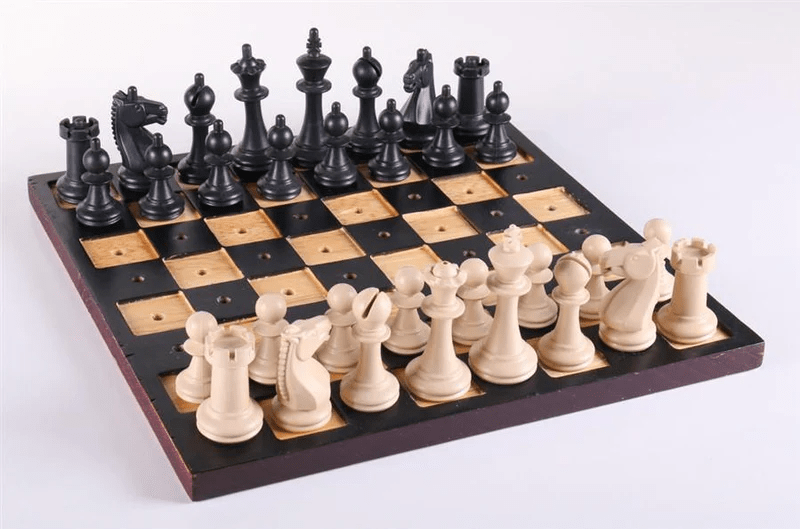
We purchased a special wooden chess set from Chess House which has several features for blind or visually impaired players. The different color squares are raised or recessed so they can be identified by touch. All the pieces have pegs on the bottom to fit in the holes in each square; this keeps pieces steady and in the center of their square. The black pieces have pegs on the top to differentiate them from the white pieces.

Specialized sets like this enable visually impaired players to play with each other and with sighted players. Several rules have accommodations for visually impaired players. For example, each player must announce their move and have it repeated back to them by their opponent. The touch move rule is adjusted to allow visually impaired players to touch any of the pieces or squares to understand the current position. Once they lift a piece out of its hole, the piece is considered “touched,” and they must move it (if they legally can).

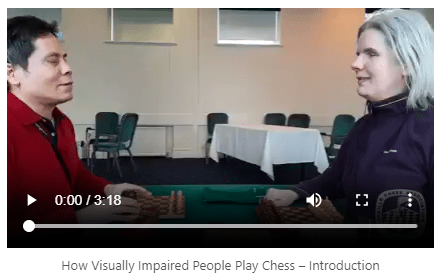
The Braille Chess Association of the UK has a wonderful “how we play” explanation and accompanying video showing how visually impaired people play chess.

Playing chess has additional benefits for those with disabilities. “When I play chess, it’s as close as I’ve ever come to a sense of equality,” Jessica Lauser told CNN in “This woman is a chess champion. And she’s blind.” “When you start the game, no matter who you are, no matter what your physical condition is or where you come from or whether you have money, both sides start with the same thing.”

If your visually impaired children would also like to play chess online, you can use these instructions from the US Blind Chess Association to play on lichess.org with a screen reader. The International Braille Chess Association organizes regular online tournaments on lichess.org for visually impaired players. Both of these organizations provide lists of resources, and the USBCA also offers more than twenty braille chess books.

If you would like to organize a tournament which will include visually impaired players, US Chess maintains an excellent set of Guidelines for Accessible Chess Events. Rule 35F in the The US Chess Rule Book: the Official Rules of Chess describes the specific rules for visually impaired players, and “Opponents with disabilities need special care, so there are special rules to make it fair” answers common questions about these rules.

Ascribing to the US Chess core values,
we believe everyone has a seat at the chess table.

Supporting Chess in Scouting

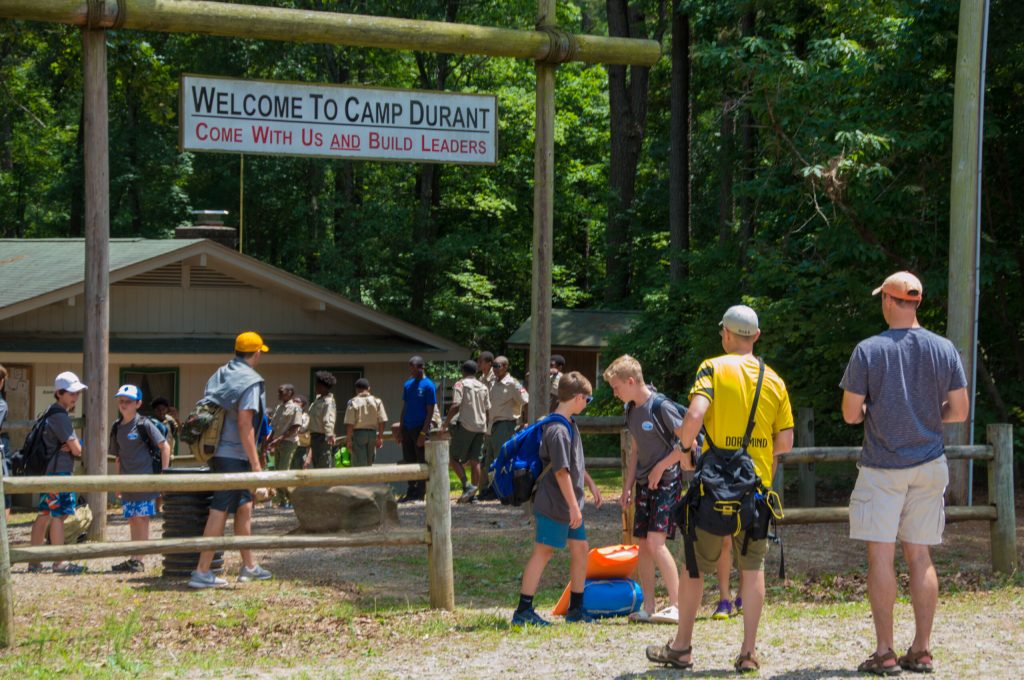
We are excited to support our first Scouting organization, the Occoneechee Council, which serves scouts and their families in twelve counties in central North Carolina. We provided chess sets and instructional materials to the Council, so they can offer chess merit badge courses in their summer programs at Camp Durant in Carthage and during merit badge universities throughout the year.

Since 2019, we have helped schools, libraries, and community organizations across North Carolina start chess clubs through our Game Changer Program.

If you would like to start a chess program in your NC Scout Council or community organization, please apply for one of our grants. If you would like to support our efforts, please consider making a donation. You could designate it for our Aditya Nicholas Dias Memorial Fund, as Aditya loved chess and scouting.

Play in a team tournament!

Many school chess clubs are getting started, so this is a great time to start planning to play in a team tournament with other schools. Team events are excellent first tournaments for students for several reasons:

  • they have fun playing with their friends
  • competing as a group relieves pressure that some students may feel (if they lose some, or even all, of their games, they can still encourage their teammates and contribute to the team’s success)
  • they can wear school t-shirts, sit together and enjoy snacks as a group between rounds, building school spirit
  • team events are usually generous with team trophies so schools have a good chance of winning something, especially if they have multiple teams

Team events are also good for coaches and organizers since announcing the team’s success (at school, in the PTA newsletter, etc.), displaying team trophies at school, and taking photos at the event for the yearbook are great ways to promote a chess club. Parents and teachers can also network with their peers from other schools and get ideas for improving their programs. You can enter most team tournaments with as few as 3 or 4 players on a team, so you do not need many students to get started.

You can choose from several team tournaments that the NC Chess Association already has in their K-12 tournament listing:

Please encourage your clubs to enter at least one team event this year!