US Chess Safe Play: Creating positive, safe environments for players

Dan Lucas, the Senior Director of Strategic Communication for US Chess, interviewed me for the June 2024 edition of One Move at a Time.
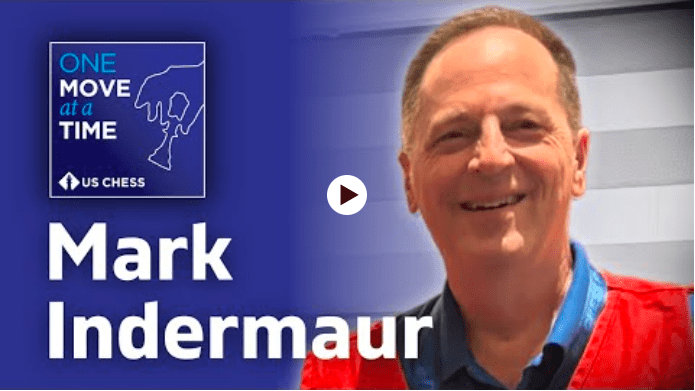
On June 1, US Chess began requiring tournament directors to complete the core training from the U.S. Center for SafeSport, so one of the topics we discussed was the US Chess Safe Play Policy.

Unfortunately, children and vulnerable adults can be victims of bullying, harassment, and abuse in many different settings – including chess. I commend US Chess for aligning with other fields like sports, scouting, and education to provide positive, welcoming environments where misconduct is less likely to happen.

In 2017, after reports of abuse in gymnastics and other sports, Congress established the U.S. Center for SafeSport to develop and enforce policies, procedures, and training to prevent abuse and misconduct and gave it the authority to resolve abuse and misconduct reports for everyone involved in the U.S. Olympic and Paralympic Movement. More than 5 million people have completed SafeSport training.

Some of the insights that I learned from the training are:

  • those who try to harm children and vulnerable adults exploit trust and power
  • they seek organizations that do not have protective policies and training
  • they groom staff, volunteers, and parents in addition to potential victims
  • they message and email their victims privately to avoid detection

I am glad that US Chess selected a well-established training program like SafeSport for its Safe Play policy. As a coach for my kids’ soccer teams, I was required to take the SafeSport core course and annual refresher courses, so I already had a SafeSport account. It was easy to link it with US Chess.

I urge chess parents to read the free Parent and Guardian’s Handbook for Safer Sport and US Chess to make it available via the Safe Play Hub. This important handbook explains:

  • what makes for a healthy coach-athlete relationship
  • what policies and good practices you should look for in your child’s organization
  • what you should know about sexual abuse and sexual misconduct
  • what you should know about other forms of misconduct, including bullying, harassment, hazing and emotional and physical misconduct
  • tips for making sports situations safer for your child
  • how to talk to your child about misconduct
  • ways to encourage your child to speak up about misconduct if it occurs
The SafeSport training is very similar to the Youth Protection training which Scouting requires for all registered volunteers as part of its Safe Scouting program. The Parent and Guardian’s Handbook for Safer Sport is also similar to Scouting’s How to Protect Your Children from Child Abuse: A Parent’s Guide. One difference is that Scouting requires mandatory reporting of witnessed or suspected child abuse and of violations of its Youth Protection policies while US Chess requests reporting of alleged misconduct, mistreatment, or behavior that conflicts with the Safe Play policy. When some of my students asked for help earning the chess merit badge, I registered as a chess merit badge counselor and had to complete the required training. Registering as an adult volunteer with my local Scouting council currently costs $77 a year while the US Chess Safe Play training cost is only $19 for the first year and $9 in subsequent years.

The Safe Play policy is also consistent with policies in schools. For example, our local school system requires all volunteers to register and pass criminal history and sexual offender registry checks every year and to comply with specified school board policies. The Safe Play training is also consistent with the annual training we have for all employees and managers where I work.

Chess tournament directors and coaches are the “front line” for US Chess. With the SafeSport training, we are now better equipped to provide our players and their families with positive, welcoming environments where misconduct is less likely to happen.

Elementary and Middle School Chess Club Tips

Would you like to start a chess club at your child’s elementary or middle school?

Many NC elementary and middle schools have started chess clubs with the help of our Game Changer program. Here are are some ideas from these clubs to help you start your own school chess club:

  • Have simple, fun goals: One club’s goals are to have fun, learn, and play lots of chess! Winning is intentionally not one of their goals, but as they pursue these three goals their children do win plenty of games and trophies.
  • Meet regularly: Most clubs meet weekly or every other week after school. Some meet before school, during lunch, or during a special “club period” (when all clubs meet).
  • Be inclusive: Most clubs are open to all ages and all ability levels. They invite beginners to join at the start of the year, so a parent or teacher and a few older students can teach them the basics. Students who already know how to play can join at any time during the year.
  • Play lots of chess! Every meeting children spend most of the time playing chess. Even children learning how to play can play mini-games with only a few pieces. Group the children by ability rather than age/grade so that their games are more fun and challenging and so that they learn more from them. Some clubs record the results of their games, so they can see if anyone is winning most of their games and needs to move up to a more challenging group. Try to avoid moving students down. Have a parent supervise each group of about 16 children. These parents do not need to know how to play chess.
  • Keep lessons brief and fun: Most clubs teach 10-15 minute lessons to their experienced players, so their students still have plenty of time to practice what they learn by playing chess. Many clubs have high school students teach; some use teachers, parents, or grandparents. Some clubs have middle school students teach with an adult helping to supervise the children. Most clubs use lessons from ChessKid or from the Chess Steps guide and workbook we provide.
  • Get PTA support: If your club is sponsored by the PTA, you can get some funding but more importantly a lot of support with volunteers, meeting space, publicity, etc.
  • Keep expenses low: Many clubs collect a small activity fee or ask for donations to buy more chess sets and eventually a few chess clocks. Most make their activity fee optional, for example collecting a $30 activity fee from those who are able to pay. While some families are not able to pay others contribute more. Most clubs deposit their funds with their PTA.
  • Save with US Chess membership vouchers: Some clubs buy every student one year US Chess memberships by buying discounted group membership vouchers.
  • Use ChessKid: Most clubs use the Basic ChessKid accounts that we provide with our Game Changer program. Some clubs buy discounted ChessKid Gold subscriptions through our program for all of their students, and some make them available to families who would like to buy them. Kids really enjoy ChessKid, and the ones who use it improve a lot.
  • Buy chess sets and supplies online: There are several good online chess suppliers.
  • Wear school or chess club t-shirts to tournaments: Most clubs wear school t-shirts or chess club t-shirts when they go to a tournament especially team tournaments. It is really helpful to have kids (and some parents) wearing the same shirt at large tournaments. Consider using the same t-shirt design for several years so families don’t have to buy new ones each year.
  • Share photos and congratulations: Some clubs share photos and congratulations using Twitter or Instagram. Others use a private Facebook group.
  • Use keychain chess pieces as prizes: A few clubs use colorful keychain chess pieces to reward effort, courage, and teamwork. For example, students can earn keychain pieces by teaching someone else how to play, playing in their first tournament, or doing 250 puzzles on ChessKid. Kids get really excited about these!
  • Give every child a chance to play in tournaments: Most clubs hold their own tournaments. Some use their club budget to pay the tournament fee at a local event for students whose families can’t afford it.
  • Publicize your success! All clubs share their tournament awards in school announcements and PTA emails and display their team trophies in the school trophy case. One club has a local trophy shop engrave every team member’s name on their team trophies.
  • Share your success with the local news: Cape Hatteras and Watauga school clubs had stories in their local newspapers. Wiley Elementary was on TV.
  • Consider using name tags for students to help parent volunteers learn their names. This is especially helpful for large chess clubs.
  • Watch an inspiring chess movie together: One club went as a group to see Queen of Katwe in a theater.
  • Invite a strong player for a simultaneous exhibition with some of your students. You could invite a strong player from the middle or high school where your students will go.
  • Organize a tournament at the end of the year: You could run a club tournament with all of your students in one section. If your club is larger, you could have separate sections for each grade.
  • Celebrate your success with an end of year party! Hand out trophies or certificates to the winners of your club tournament, recognize your graduating students, and enjoy some snacks. Hunter Elementary made a fun chess cake.

For more information, please see “Start an elementary school chess club.

Please add a comment with your suggestions or questions.

Good luck with your club!